Mounting type is rarely treated as a design decision in its own right, yet it does more than almost any other choice to determine whether a lighting fixture feels integrated into a space or simply installed on top of it.
What you’ll find in this article: how pendant, stem, surface, and recessed mounting each work, which architectural conditions call for one over another, and what to confirm before a mounting type is locked into a specification.
Before a single fixture is chosen, the ceiling has usually already made the decision. A nine-foot slab crowded with exposed ductwork asks for a different solution than a fourteen-foot lobby with generous plenum depth above the finished surface, and no amount of fixture quality will compensate for a mounting type that was wrong for the room from the start. Understanding what each mounting method actually does — mechanically and visually — turns that decision from guesswork into something closer to design logic.

Pendant mounting
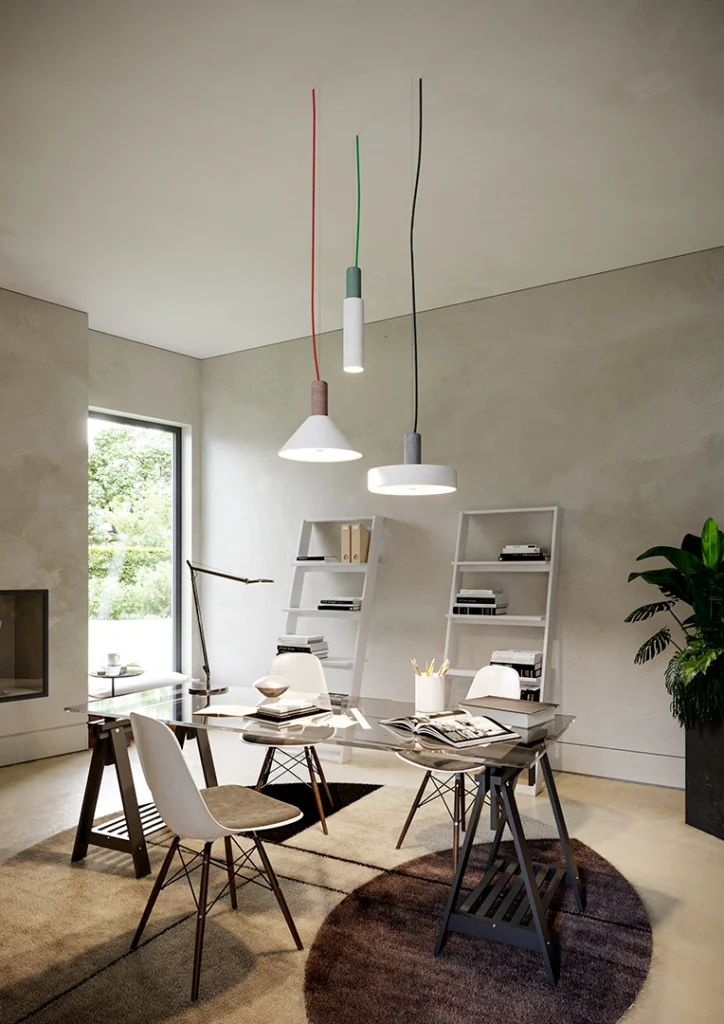
A pendant suspends the light source from a cord, cable, or rod, lowering it into occupied space rather than leaving it flush against the ceiling. This makes it less a
fixture and more a presence in the room — something people notice and orient around.
- Suited to spaces with genuine vertical clearance, where a drop reads as intentional rather than cramped
- Drop length is often field-adjustable, a practical advantage on sites where finished ceiling height isn’t fully settled
- Frequently the anchor piece in a room, carrying as much design weight as furniture or art
Stem mounting
A stem holds a fixture at a fixed distance using a rigid rod rather than a flexible line, producing a straighter, more architectural silhouette.
- Better suited than a pendant to minimal or highly geometric interiors, where a clean vertical line matters
- Drop length is fixed at the factory, which rewards accurate measurement well before installation
- Especially effective in rows or grids, where consistency across multiple fixtures is part of the design intent

Surface mounting
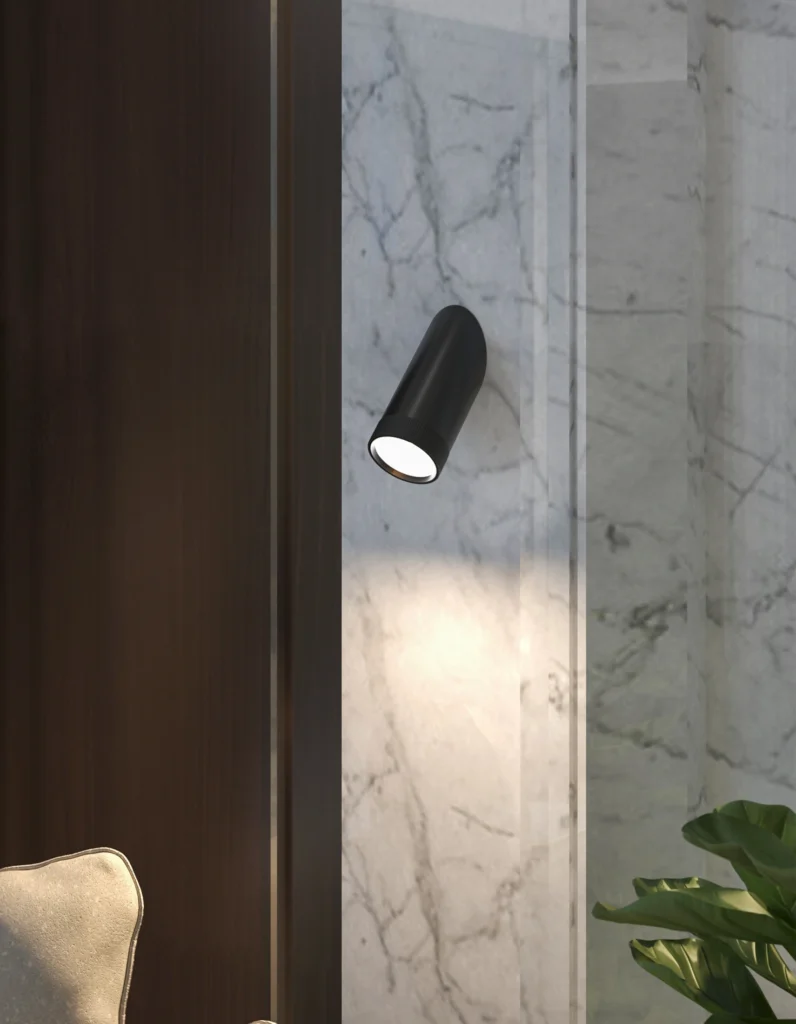
A surface-mounted fixture sits directly against the ceiling or wall with no drop at all, making it the most straightforward of the four approaches to specify and install.
- The default solution for low ceilings, where a suspended fixture would compromise headroom
- Requires no plenum depth or structural drop point, which simplifies both budget and schedule
- Puts the fixture’s own design on full display, since nothing about it is concealed by the ceiling plane
Recessed mounting
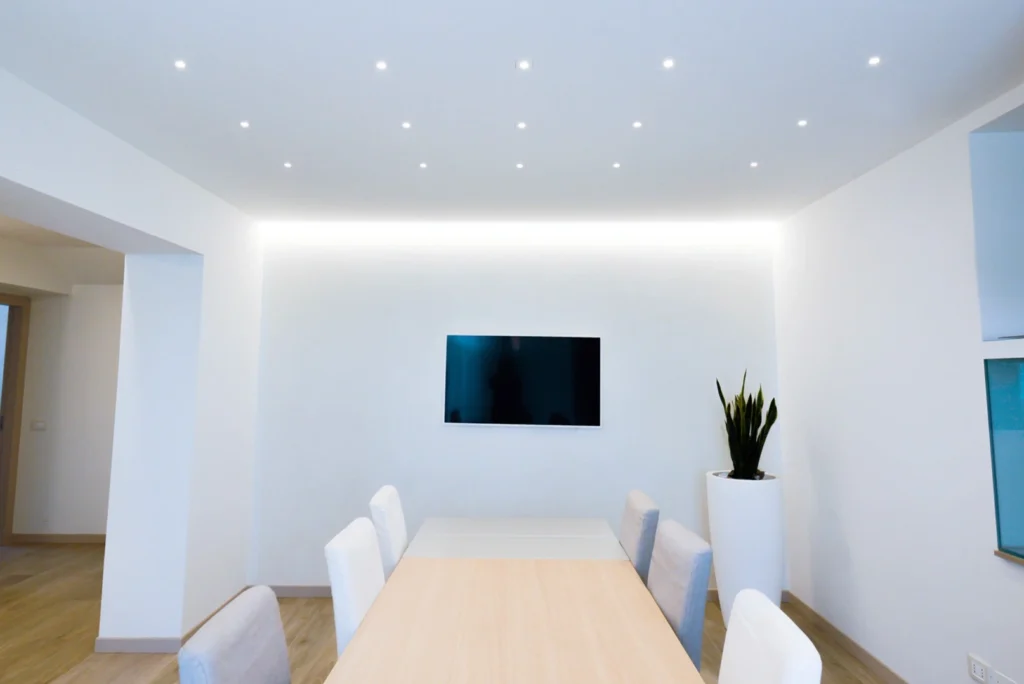
A recessed fixture disappears into the ceiling cavity, leaving only its trim or lens visible from below — the quietest possible presence a light source can have.
- Depends on adequate plenum depth above the finished ceiling, which must be confirmed early in design
- Produces the flattest, most minimal ceiling line of any mounting type
- The least forgiving to change after installation, since repositioning means reopening the ceiling itself
None of these four approaches is inherently superior; each answers a different set of architectural constraints. The strongest specifications start with the ceiling’s actual conditions and let the mounting type follow from there, rather than choosing a fixture first and hoping the ceiling cooperates.